♦ SOCIAL ENTREPRENEURSHIP AND SUSTAINABLE DEVELOPMENT GOALS
Social entrepreneurship is related to SOCIALLY RESPONSIBLE INVESTING (SRI) and environmental social gover (ESG) investing. SRI is the practice of investing money in companies and funds that have positive social impacts. SRI has also grown in popularity in recent years.
Socially responsible investors will often eschew investments in companies that produce or sell addictive substances (like alcohol, gambling, and tobacco). They may also seek out companies that are engaged in social justice, environmental sustainability, and alternative energy or clean technology efforts.
Socially conscious investors screen potential new investments for environmental, social, and governance (ESG) criteria. This set of standards considers how a company performs as a steward of nature, how it manages relationships with employees, suppliers, customers, and the communities where it operates, and how it treats its company’s leadership, compensates its executives, and approaches internal control and shareholder rights.
♦SUSTAINABLE DEVELOPMENT GOALS

The Sustainable Development Goals (SDGs), also known as the Global Goals, were adopted by all United Nations Member States in 2015 as a universal call to action to end poverty, protect the planet, and ensure that all people enjoy peace and prosperity by 2030. They are an integrated set of 17 interlinked objectives. Achieving these goals requires the collaborative efforts of governments, civil society, the private sector, and individuals worldwide.
Here's a brief overview, categorized for clarity:
People:
- No Poverty (Goal 1): End poverty in all its forms everywhere.
- Zero Hunger (Goal 2): End hunger, achieve food security and improved nutrition and promote sustainable agriculture.
- Good Health and Well-being (Goal 3): Ensure healthy lives and promote well-being for all at all ages.
- Quality Education (Goal 4): Ensure inclusive and equitable quality education and promote lifelong learning opportunities for all.
- Gender Equality (Goal 5): Achieve gender equality and empower all women and girls.
- Clean Water and Sanitation (Goal 6): Ensure availability and sustainable management of water and sanitation for all.
- Affordable and Clean Energy (Goal 7): Ensure access to affordable, reliable, sustainable and modern energy for all.
- Decent Work and Economic Growth (Goal 8): Promote sustained, inclusive and sustainable economic growth, full and productive employment and decent work for all.
- Industry, Innovation and Infrastructure (Goal 9): Build resilient infrastructure, promote inclusive and sustainable industrialization and foster innovation.
- Reduced Inequalities (Goal 10): Reduce inequality within and among countries.
- Sustainable Cities and Communities (Goal 11): Make cities and human settlements inclusive, safe, resilient and sustainable

♦Gold Standard offsetting
Net-zero emissions is the ultimate goal, with prevention, reduction and investment the best ways to achieve that. Offsetting is an option too but think of that more as a last resort. Why? The best solution is to stop harmful emissions from getting into the atmosphere in the first place.
But if your business does go down the offsetting route, be sure to use Gold Standard certified projects. These offer long-term resolutions, such as wind farm initiative providing renewable power to 70,000 Indonesian homes, reducing dependence on fossil fuels. Gold Standard also advocates going Climate+ – rather than aiming for carbon-neutral, offset more than your footprints
Measure and reduce your carbon footprint
As well as investing in a sustainable transport service like zeelo
diverting to green energy, or Gold Standard offsetting, other ways to reduce the carbon footprint of your business include:
As well as reducing your carbon footprint, it’s also a good idea to measure it. That way, your business can set targets and keep track of progress. Emissions are grouped like this
1. Renewable innovation: Johnson & Johnson

An excellent example of CSR on the frontline is big pharma pioneer Johnson & Johnson. They have focused on reducing their impact on the planet for three decades. Their initiatives range from leveraging the power of the wind to providing safe water to communities around the world.
♦Social issues: Google
Google is trusted not only for its environmentally friendly initiatives but also due to its outspoken CEO, Sundar Pichai. He stands up against social issues including President Donald Trump’s anti-Muslim comments and the era created by AI in terms of misinformation and fake news.
Google also funds initiatives to drive inclusion both in the company and society in the areas of:
- ♦Racial equity
- ♦Disability inclusion
- ♦Gender equality
♦Sustainability: Coca-Cola

As brand, Coca-Cola is putting a huge focus on sustainability. The key areas are climate, packaging and agriculture along with water stewardship and product quality.
Their message is ‘a world without waste’, with the aim of collecting and recycling every bottle, making their packaging 100% recyclable and replacing all water used in creating their drinks back to the environment to ensure water security. They aim that by 2030, they will have reduced their carbon footprint by 25%
♣"lUXURY AND SUSTAINABILITY ARE ONE AND SAME"
♦Sustainable practices for companies
Over one million species face extinction, our oceans are dying, and rapid change in nature is not reversible. Shocking, right❓❔ At a business level, there are a number of sustainable practices that can be put in place to positively impact environmental change. These range from shuttle employee programmes to throwing your organisation more heavily into community efforts.
♦Workplace diversity & inclusion: Starbucks

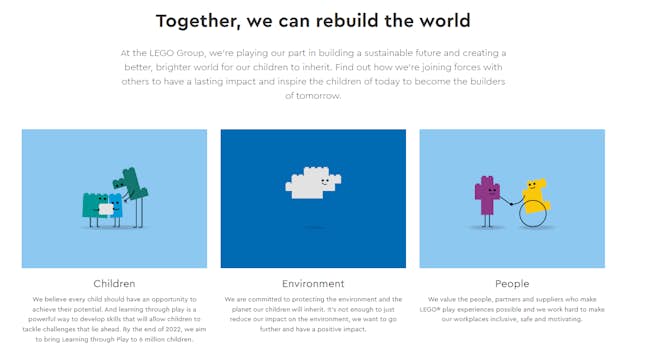
♦ Packaging: LEGO
~ KANAN THAKRAL.....


No comments:
Post a Comment